Nano Banana Rumor Update: Flow Report Points to 2.1
Unverified rumor update: TestingCatalog reports a Nano Banana 2.1 label replacing 2.5 Flash in Flow. The final name, access and specifications remain unsettled.
Comparison guides for images, videos, audio, documents, prompts, AI outputs, and creative production workflows.
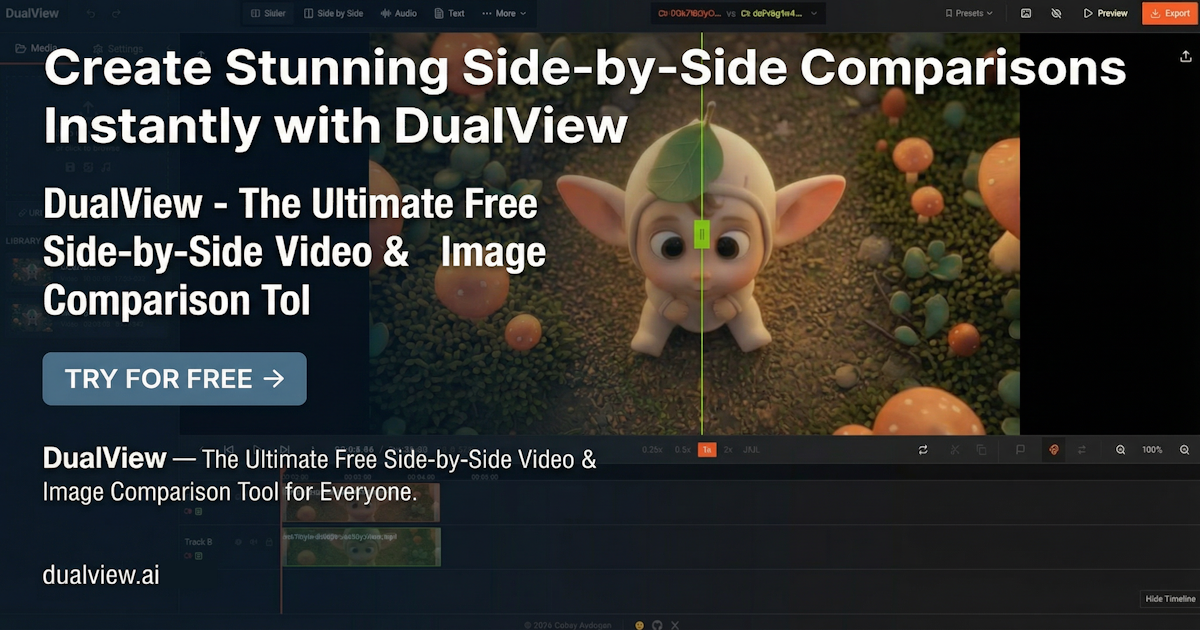
Unverified rumor update: TestingCatalog reports a Nano Banana 2.1 label replacing 2.5 Flash in Flow. The final name, access and specifications remain unsettled.
Qwen 4 is in training, says Alibaba. Separate the official roadmap from unverified 27B reporting, unknown release details and practical evaluation planning.
Unverified Kimi K3.1 rumor: reports disagree on timing, while some claimed controls already appear in K3 documentation. Read the evidence and unknowns.
Unverified Muse Spark 1.4 rumor: an OpenCode data listing exists, but access and specifications remain unclear. Read the evidence and Contributor caveats.
Unverified DeepSeek V5 rumors link an imminent launch to Huawei chips. We trace accessible reports, separate model identity from hardware, and mark what is unknown.
Unverified Kling 4.0 reports describe longer clips and more controls. We trace the public reporting and separate preview claims from launch dates and API access.
Google announces Gemini 4 Argon for trusted cyber defenders. Read what is confirmed, what remains restricted, and why earlier Arena rumors stay unverified.
OpenAI video rumor correction: public accounts say Altman meant voice, not video. Read the attribution limits and why the earlier DevDay inference weakens.
DevDay confirms GPT-6.1 Sol in Work, Codex and API, not Chat, plus Astra Ultrafast. Read the dated follow-up and preserved original rumor.
Compare MiniMax H3 Max and H3 text-to-video APIs: native versus refined resolution, prompt controls, audio handling, dated costs, and evidence limits.
Sonnet 5.5 launched September 28. Read verified access and token limits, with the original checkpoint rumors preserved and clearly separated from confirmed facts.
FLUX 3 vs Grok Imagine 1.5: compare the shared image-to-video lane, workflow breadth, native audio, duration evidence, launch status, and fair evaluation method.
MiniMax H3 vs Grok Imagine 1.5: compare their overlapping image-to-video lane, input scope, audio direction, resolution documentation, and test design.
Seedance 2.5 vs Grok Imagine 1.5: compare image, text and reference inputs, endpoint-specific limits, audio and editing. Updated September 28, 2026.
Compare GPT Image 2.5 Flare and Sunburst text-to-image controls, size limits, transparent output, token billing, and the limits of vendor quality claims.
Compare Muse Image and Seedream 5.0 Pro editing APIs: reference limits, output sizing, tentative pricing, delivery controls and evidence-backed tradeoffs.
Compare Vidu S2-Avatar and S1 for interactive character video: resolution, live reference controls, API access, streaming costs and evidence gaps.
Compare ViRDM and four-step Causal Forcing video models: public checkpoints, text inputs, output limits, reported evidence and self-hosting cost assumptions.
Compare Grok Imagine Image 2.0 and Seedream 5.0 Pro editing APIs: reference limits, output settings, dated fal costs, and a fair image review plan.
Compare PixVerse R2 and R1 on documented video controls, session memory, access, and unknown costs, with a repeatable plan for testing both models.
MiniMax H3 vs FLUX 3: compare duration, resolution claims, native audio, reference workflows, editing controls, availability, and a fair test protocol.
MiniMax H3 vs Seedance 2.5: compare documented duration, native audio-video generation, multimodal references, editing controls, and production workflows.
Seedance 2.5 vs FLUX 3: compare 30-second and 20-second generation windows, native audio-video workflows, references, editing, chaining, and test protocol.

Compare 3D renders, materials, and lighting setups. Essential guide for 3D artists comparing render engines, AI 3D generation, and visualization quality.

Compare AI avatars and talking head generators. Evaluate lip sync accuracy, expression quality, and video realism across HeyGen, Synthesia, D-ID, and more.

Compare AI video editing models like Luma, Kling, Wan, Runway, Pika, and Hailuo with practical visual review workflows.

Compare speech-to-text transcription quality from Whisper, Assembly AI, Deepgram, and more. Evaluate accuracy, timestamps, speaker diarization, and language support.

Compare text-to-speech AI voices from ElevenLabs, OpenAI TTS, Amazon Polly, Google, and more. Evaluate naturalness, emotion, pronunciation, and voice cloning quality.

Compare two AI-generated images side by side for free. Review prompt adherence, reference identity, text and editing artifacts with a demo and report template.
Learn a practical DualView workflow to compare text-to-video model outputs frame by frame for generative media teams.
Compare 3D models online free with GLB and GLTF side-by-side review, synchronized orbit, wireframe checks, LOD review, and AI asset inspection.
Compare AI upscaler results for artifacts, detail preservation, hallucinated texture, sharpness, and face changes using synchronized zoom and visual review.
Compare documents online free, including PDF, DOCX, CSV, Excel, and text files, with practical revision review and structured diff workflows.
Compare H.264, H.265, VP9, and AV1 video exports visually for compression artifacts, motion detail, banding, bitrate tradeoffs, and delivery QA.

Create before and after photo comparisons online with slider, side-by-side, and overlay review for edits, retouching, restoration, and client approvals.

Compare audio files online free with waveform review, A/B listening, timing checks, and mix/master inspection workflows in DualView.

Compare two images online free with side-by-side, slider, overlay, and difference views. Use a fast browser workflow for photos, edits, AI outputs, and QA.

Compare two videos side by side online with synced playback, slider and flicker review, and export tips for QA, edits, AI videos, and compression tests.

Compare JSON online free for API responses, app settings, AI prompt configs, model outputs, and structured data review with a browser JSON diff workflow.

Use a prompt diff tool to compare AI prompt versions online, spot changed instructions, examples, constraints, variables, and output-format rules.
Compare exposure with false color, zebras, histograms, and zone system checks for video, photo, and color review workflows.
Use histograms, waveform monitors, vectorscopes, false color, and focus peaking to compare video exposure and color.
Export before-after comparison videos with WebGL transitions, including wipes, dissolves, glitches, morphs, and clean reveal clips.
Compare audio spectrograms to spot compression artifacts, EQ changes, noise, and frequency differences between mixes or exports.
Complete guide to LUFS loudness metering. Learn EBU R128 standards, platform targets for Spotify, YouTube, Apple Music. Master to the right loudness for streaming.

Learn structured JSON prompting for AI image generation, with examples for repeatable prompts, settings, and comparison workflows.

Learn how to compare material textures, UV maps, normal maps, and PBR materials. Essential guide for 3D artists comparing texture quality, tiling, and baking results.

Master A/B testing for visual content. Learn how to compare designs, images, and videos to improve conversion rates and user engagement.

Learn how to compare video quality across different codecs, compression levels, and upscaling methods. Technical guide for video professionals.

Compare images, videos, and AI-generated content with free before-after analysis, A/B testing, quality checks, and DualView workflows.
How to compare color grades for film, video, and photography. LUT comparison, grade matching between shots, client review workflows. Professional colorist techniques.

Compare advertising creatives effectively. Learn why A/B testing ad images, video ads, and banner designs is essential for maximizing ROAS and campaign performance.

Compare architectural visualizations, design alternatives, and AI-generated ArchViz. Essential guide for architects comparing renders, materials, and design options.

Compare ecommerce product listings, images, and A/B test results. Essential guide for online retailers comparing product pages, photos, and conversion optimization.

Compare educational content, student work, and AI-generated learning materials. Essential guide for educators comparing assignments, versions, and teaching resources.

Compare game graphics settings, ray tracing on/off, DLSS modes, and texture quality. Essential guide for PC gamers optimizing visual quality vs performance.

Compare manufacturing outputs, defect detection, and quality control images. Essential guide for QC teams comparing products against specifications and standards.

Learn why comparing product photos is essential for ecommerce success. Compare lighting setups, backgrounds, angles, and AI-generated product images side by side.

Compare sound effects and audio design. Essential guide for sound designers comparing SFX variations, foley recordings, and AI-generated audio effects.

Compare VFX shots and visual effects renders. Essential guide for VFX artists comparing composites, CGI integration, color grades, and before/after visual effects.

Compare AI virtual try-on results from different models. Learn why fashion try-on comparison is essential for clothing brands, retail, and AI fashion technology.